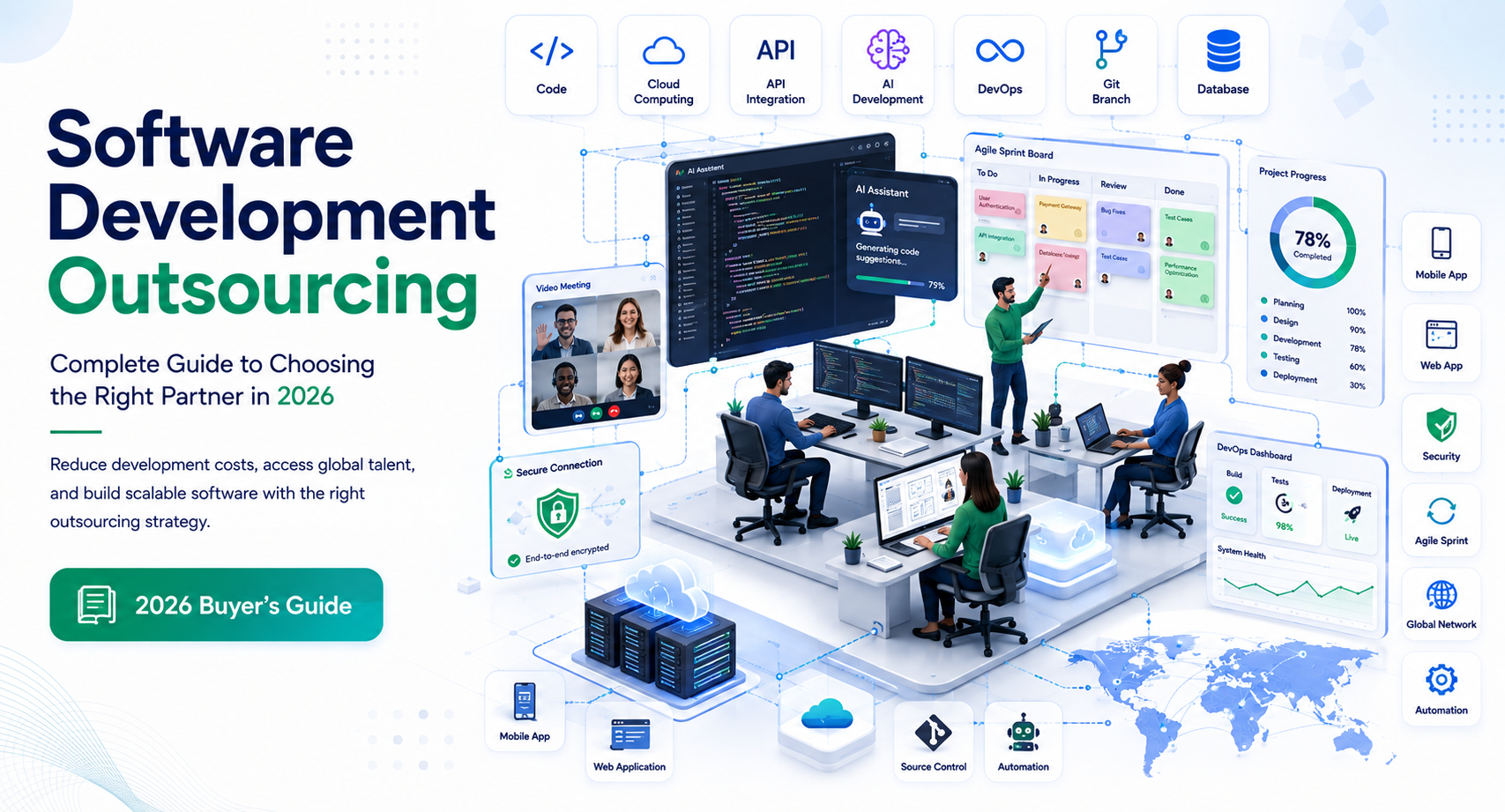
Software Development Outsourcing: Complete Guide to Choosing the Right Partner in 2026
Building software has become a strategic priority for businesses of every size. Whether you’re launching a startup, modernizing internal systems, creating a SaaS platform, or developing a mobile app, finding experienced developers can be both expensive and time-consuming.
Hiring an in-house development team isn’t always the best option. Recruitment takes months, salaries continue to rise, and specialized expertise isn’t always available locally. These challenges have led many organizations to explore software development outsourcing as a practical and scalable alternative.
Today, companies across the United States outsource software development to gain access to global talent, accelerate product delivery, reduce development costs, and focus internal teams on core business priorities.
However, successful outsourcing involves much more than selecting the lowest-priced vendor. Choosing the right partner, communication model, project management approach, and security practices all play a critical role in project success.
In this guide, you’ll learn:
- What software development outsourcing is
- Different outsourcing models
- Benefits and potential challenges
- How to evaluate outsourcing companies
- Best practices before starting a project
- Key factors that influence project success
Whether you’re a startup founder, CTO, product manager, or business owner, this guide will help you make informed outsourcing decisions in 2026 and beyond.
What Is Software Development Outsourcing?
Software development outsourcing is the process of hiring an external company or dedicated development team to design, build, test, maintain, or support software applications.
Instead of employing every developer internally, organizations work with specialized software development firms that provide technical expertise for specific projects or ongoing development needs.
Businesses commonly outsource:
- Web application development
- Mobile app development
- SaaS products
- Enterprise software
- Cloud applications
- API development
- UI/UX design
- Software testing
- DevOps services
- Maintenance and support
Outsourcing can involve a single developer, a dedicated team, or an entire software engineering department depending on project complexity.
Why Businesses Outsource Software Development
The demand for experienced software engineers continues to grow, making recruitment increasingly competitive.
Outsourcing helps organizations overcome several common challenges.
Access to Specialized Expertise
Modern software projects often require expertise in multiple technologies, including:
- Artificial intelligence (AI)
- Cloud computing
- Cybersecurity
- Mobile development
- Data engineering
- DevOps
- Blockchain
- Machine learning
Rather than hiring specialists for every skill, businesses can work with outsourcing partners that already have experienced teams.
Faster Product Development
Building an internal team may take several months.
An outsourcing company can often begin development within weeks, allowing businesses to launch products more quickly.
This speed is especially valuable for startups entering competitive markets.
Lower Development Costs
Recruiting, salaries, employee benefits, office space, hardware, and training all contribute to software development expenses.
Outsourcing can reduce many of these costs while providing access to highly skilled professionals.
Lower cost does not necessarily mean lower quality. Many outsourcing firms maintain mature development processes, experienced engineers, and strong quality assurance practices.
Greater Flexibility
Project requirements often change.
Outsourcing allows businesses to scale development teams up or down based on project needs without hiring or laying off full-time employees.
Focus on Core Business Activities
Instead of managing every technical detail internally, leadership teams can focus on:
- Business strategy
- Product innovation
- Customer relationships
- Marketing
- Sales
- Operations
Meanwhile, the outsourcing partner handles software development.
Common Software Development Outsourcing Models
Choosing the right engagement model is just as important as selecting the right vendor.
Offshore Outsourcing
Offshore outsourcing involves hiring development teams in another country.
Many U.S. companies choose offshore partners because they offer access to large talent pools and competitive pricing.
Advantages
- Lower development costs
- Large availability of developers
- Around-the-clock development across time zones
Considerations
- Time zone differences
- Communication planning
- Cultural differences
Nearshore Outsourcing
Nearshore outsourcing means working with development teams in neighboring or nearby countries.
For companies in the United States, this may include development partners in Canada or Latin America.
Benefits often include:
- Smaller time zone differences
- Easier collaboration
- Similar business hours
- Reduced travel time
Onshore Outsourcing
Onshore outsourcing means hiring a software company located within the same country.
Although development costs may be higher, communication and regulatory alignment are often simpler.
This model works well for projects requiring frequent collaboration or strict compliance requirements.
Dedicated Development Team
A dedicated team functions as an extension of your internal engineering department.
Businesses gain long-term access to developers while maintaining direct involvement in product planning and priorities.
This model is common for ongoing SaaS development and enterprise software projects.
Project-Based Outsourcing
Some organizations outsource a single project with clearly defined requirements, budget, and timeline.
Examples include:
- Mobile applications
- Customer portals
- Internal business tools
- Website redevelopment
- API integrations
This model works well when project requirements are stable.
Benefits of Software Development Outsourcing
When managed effectively, outsourcing provides strategic advantages beyond cost savings.
Access to Global Talent
Organizations are no longer limited to hiring developers within commuting distance.
Outsourcing opens access to highly skilled professionals across multiple technologies and industries.
Improved Scalability
Development teams can expand as project requirements grow.
Businesses avoid lengthy recruitment processes while maintaining project momentum.
Faster Innovation
Experienced outsourcing companies often introduce:
- Modern frameworks
- Automation tools
- Agile development practices
- DevOps workflows
- Cloud-native architectures
These capabilities accelerate software delivery.
Reduced Business Risk
Established outsourcing providers typically follow structured development methodologies, documentation standards, testing processes, and quality assurance practices that reduce project risks.
Better Resource Allocation
Internal teams can concentrate on strategic initiatives while outsourced developers focus on implementation.
This separation often improves overall productivity.
Potential Challenges to Consider
Outsourcing offers many advantages, but businesses should also understand potential risks.
Communication Issues
Unclear requirements are one of the most common reasons software projects fail.
Successful outsourcing requires:
- Regular meetings
- Clear documentation
- Defined responsibilities
- Transparent reporting
Time Zone Differences
Global teams may have limited overlapping work hours.
Many organizations address this by scheduling regular collaboration windows and using project management tools.
Security and Data Protection
Software projects often involve sensitive business information.
Before sharing data, verify that your outsourcing partner follows strong security practices, including:
- Secure development environments
- Data encryption
- Access controls
- Confidentiality agreements
- Compliance with relevant regulations
For U.S. businesses in industries such as healthcare or finance, additional regulatory requirements may apply.
Quality Control
Not every outsourcing company follows the same engineering standards.
Review:
- Development methodology
- Testing processes
- Code review practices
- Documentation quality
- Previous project experience
Strong quality assurance helps reduce future maintenance costs.
How to Choose the Right Software Development Outsourcing Partner
Selecting the right partner has a greater impact on project success than choosing a specific programming language or technology stack.
Evaluate Technical Expertise
Review the company’s experience with technologies relevant to your project.
Examples include:
- React
- Angular
- Node.js
- Python
- .NET
- Java
- AWS
- Microsoft Azure
- Google Cloud
Ask for case studies or examples of similar projects.
Review Industry Experience
A company that has developed software for your industry already understands many common workflows and compliance requirements.
Examples include:
- Healthcare
- Finance
- Manufacturing
- Retail
- Logistics
- Education
Industry knowledge often reduces onboarding time.
Assess Communication
Strong communication is essential throughout the project.
Look for teams that provide:
- Regular progress updates
- Dedicated project managers
- Clear documentation
- Transparent timelines
- Defined escalation processes
Good communication helps prevent misunderstandings before they become costly issues.
Understand Their Development Process
Ask prospective partners about their software development lifecycle.
A mature outsourcing company typically follows practices such as:
- Agile or Scrum methodologies
- Sprint planning
- Code reviews
- Automated testing
- Continuous integration and deployment (CI/CD)
- Version control using Git
Structured development processes generally lead to higher-quality software and more predictable project outcomes.
Check Client Reviews and References
Independent reviews, testimonials, and client references can provide valuable insight into a company’s reliability, communication style, and ability to deliver projects on time.
Whenever possible, speak with previous clients who have completed projects similar to yours.
Internal Linking Opportunity: Link to related resources such as Custom Software Development, IT Staff Augmentation, Software Development Life Cycle (SDLC), Cloud Application Development, Mobile App Development, or DevOps Services.
Software Development Outsourcing Pricing Models
Understanding pricing models is essential before signing a contract. The right model depends on your project scope, timeline, budget, and the level of flexibility you need.
Fixed Price
A fixed-price contract is best suited for projects with clearly defined requirements, timelines, and deliverables.
Best for:
- Company websites
- MVPs with fixed features
- Internal business applications
- Small mobile apps
Advantages
- Predictable budget
- Clearly defined scope
- Easier financial planning
Considerations
- Scope changes can increase costs.
- Less flexibility once development begins.
Time and Materials (T&M)
With the Time and Materials model, you pay for the actual hours worked and the resources used during development.
Best for:
- Agile projects
- Long-term software development
- Products with evolving requirements
Advantages
- Greater flexibility
- Easier to accommodate feature changes
- Better for continuous improvement
Considerations
- Requires active project oversight.
- Final cost may vary depending on project scope.
Dedicated Development Team
In this model, the outsourcing company provides a team that works exclusively on your project.
The team may include:
- Software developers
- UI/UX designers
- QA engineers
- DevOps specialists
- Project managers
- Business analysts
Best for:
- SaaS products
- Enterprise software
- Long-term product development
- Digital transformation projects
This approach provides the flexibility of an in-house team without the complexity of recruiting and managing employees directly.
Best Practices for Successful Software Development Outsourcing
Choosing the right partner is only the beginning. Following proven project management practices helps ensure successful outcomes.
Define Clear Business Goals
Before contacting vendors, document:
- Business objectives
- Target users
- Required features
- Technical requirements
- Success metrics
- Project timeline
Clear goals reduce misunderstandings and improve project planning.
Create Detailed Documentation
A comprehensive project specification helps developers understand your expectations.
Include:
- Functional requirements
- User stories
- Wireframes or mockups
- API requirements
- Security expectations
- Integration needs
The more detailed your documentation, the more accurate development estimates will be.
Choose the Right Communication Tools
Consistent communication keeps projects on track.
Many outsourcing teams use tools such as:
- Jira
- Trello
- Azure DevOps
- Slack
- Microsoft Teams
- GitHub
These platforms improve collaboration, task tracking, and project visibility.
Schedule Regular Progress Reviews
Weekly or biweekly meetings help identify issues early.
Review topics may include:
- Sprint progress
- Completed features
- Upcoming priorities
- Risks and blockers
- Budget updates
- Timeline adjustments
Frequent reviews help maintain alignment between your business goals and the development team’s work.
Prioritize Security
Software projects often involve confidential business information and customer data.
Discuss security requirements before development begins.
Consider:
- Non-disclosure agreements (NDAs)
- Intellectual property ownership
- Secure code repositories
- Access controls
- Compliance requirements
- Security testing
For businesses operating in regulated industries within the United States, compliance with standards such as HIPAA, PCI DSS, or SOC 2 may also influence vendor selection.
Common Mistakes to Avoid
Many outsourcing challenges are preventable with proper planning.
Selecting a Vendor Based Only on Price
The lowest quote rarely represents the best value.
Evaluate vendors based on:
- Technical expertise
- Communication
- Industry experience
- Development process
- Long-term support
Quality software often delivers greater long-term savings than inexpensive development with recurring maintenance issues.
Unclear Project Requirements
Changing requirements are common, but starting without a clear vision increases project risk.
Spend adequate time defining goals before development begins.
Ignoring Cultural and Communication Differences
Successful global collaboration requires clear expectations, regular meetings, and documented decisions.
Establish communication protocols early in the project.
Not Defining Ownership Rights
Contracts should clearly specify ownership of:
- Source code
- Documentation
- Designs
- Databases
- Intellectual property
Clarifying these terms protects both parties.
Skipping Quality Assurance
Testing should occur throughout development—not just before launch.
Comprehensive quality assurance should include:
- Functional testing
- Performance testing
- Security testing
- Compatibility testing
- User acceptance testing (UAT)
Early testing reduces the cost of fixing defects later.
Trends Shaping Software Development Outsourcing in 2026
The outsourcing landscape continues to evolve as businesses adopt new technologies and development practices.
Artificial Intelligence
AI is improving software development through:
- Code generation assistance
- Automated testing
- Bug detection
- Documentation support
- Project estimation
While AI enhances productivity, experienced developers remain essential for architecture, business logic, security, and quality assurance.
Cloud-Native Development
Organizations increasingly build applications using cloud platforms such as AWS, Microsoft Azure, and Google Cloud.
Cloud-native development improves scalability, availability, and deployment flexibility.
DevSecOps
Security is becoming an integral part of the software development lifecycle rather than a final testing step.
Modern outsourcing partners increasingly adopt DevSecOps practices that integrate security into continuous development and deployment pipelines.
Low-Code and No-Code Platforms
Businesses are using low-code tools for internal applications and workflow automation, while outsourcing teams focus on more complex custom development.
This hybrid approach can reduce costs and accelerate delivery for certain projects.
Product-Based Partnerships
Many organizations now prefer long-term partnerships instead of one-time development contracts.
Dedicated teams gain a deeper understanding of business goals, resulting in continuous improvements and faster feature delivery over time.
May you like: Corporate Software Inspector: Complete Guide for Businesses in 2026
Frequently Asked Questions
What is software development outsourcing?
Software development outsourcing is the practice of hiring an external company or development team to design, build, test, maintain, or support software applications instead of relying entirely on in-house developers.
Why do companies outsource software development?
Organizations outsource software development to access specialized expertise, reduce hiring costs, accelerate product development, scale teams quickly, and focus internal resources on strategic business activities.
Is outsourcing software development safe?
Yes, when working with a reputable provider that follows strong security practices. Businesses should use contracts, non-disclosure agreements, secure development environments, and clearly define intellectual property ownership before sharing sensitive information.
How much does it cost to outsource software development?
Costs vary depending on project complexity, team size, technology stack, and vendor location. Fixed-price, time-and-materials, and dedicated team models are the most common pricing structures.
How do I choose the right outsourcing company?
Look for a partner with relevant technical expertise, industry experience, transparent communication, proven development processes, strong client references, and the ability to scale as your project grows.
Conclusion
Software development outsourcing has become a strategic advantage for businesses looking to build high-quality digital products without the challenges of hiring and maintaining large in-house engineering teams. Whether you’re developing a customer-facing application, enterprise platform, SaaS product, or mobile app, outsourcing can provide access to specialized expertise, faster development cycles, and greater operational flexibility.
Success depends on choosing the right partner rather than simply selecting the lowest-cost provider. Evaluate technical capabilities, communication practices, security standards, industry experience, and development methodology before making a decision. Businesses that invest time in planning, documentation, and collaboration are far more likely to achieve successful outcomes.
If you’re preparing to outsource software development, begin by defining your project goals, documenting your requirements, and comparing several experienced vendors. You may also find it helpful to explore related guides on custom software development, IT staff augmentation, cloud application development, DevOps services, and software architecture to make well-informed technology decisions for your organization.