
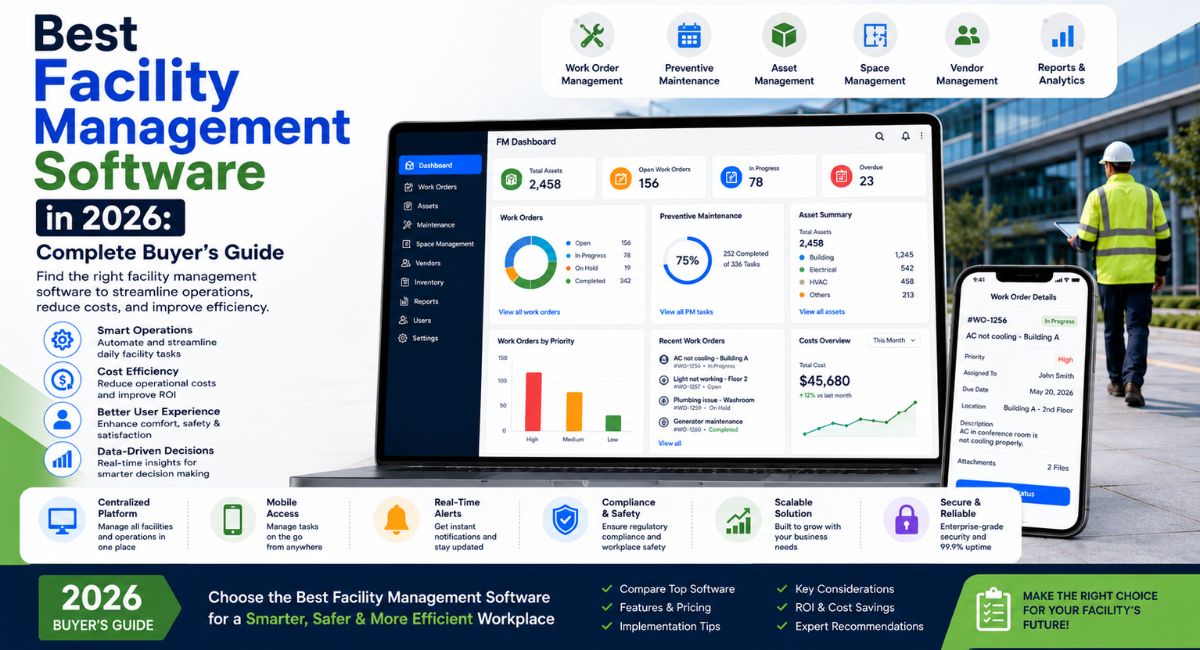
Best Facility Management Software in 2026: Complete Buyer’s Guide
Introduction
Managing facilities has become far more complex than simply fixing broken equipment or scheduling maintenance tasks.
Today’s facility managers oversee everything from asset performance and preventive maintenance to compliance requirements, vendor relationships, workplace safety, and operational efficiency. As organizations expand across multiple locations, spreadsheets and paper-based systems often struggle to keep up.
This is where facility management software becomes essential.
Modern facility management software helps businesses centralize operations, automate maintenance workflows, track assets, manage vendors, monitor compliance, and make data-driven decisions. Whether you’re responsible for a manufacturing plant in the United States, a hospital in the UK, or a commercial property portfolio in Australia, the right platform can significantly improve efficiency and reduce operational costs.
The global facility management industry is also becoming increasingly technology-driven. Organizations now use cloud-based systems, mobile applications, IoT sensors, and predictive maintenance tools to manage facilities more effectively. Industry bodies such as the International Facility Management Association (IFMA) and ISO 41001 standards continue to emphasize structured facility management practices to improve operational performance.
In this guide, you’ll learn how facility management software works, what features matter most, how it differs from CMMS and IWMS platforms, and which solutions deserve consideration in 2026.
What Is Facility Management Software?
Definition and Purpose
Facility management software (FMS) is a digital platform that helps organizations manage buildings, assets, maintenance operations, work orders, space utilization, vendors, and compliance activities from a centralized system.
The primary purpose of facility management software is simple: improve operational efficiency while reducing costs and downtime.
Instead of using multiple disconnected tools, facility managers can monitor assets, assign maintenance tasks, track inspections, and generate reports from a single platform.
Organizations commonly use facility management software to:
- Manage maintenance requests
- Track facility assets
- Schedule preventive maintenance
- Monitor compliance activities
- Manage vendors and contractors
- Analyze facility performance
- Improve resource allocation
Think of facility management software as the control center for your facilities operation.
When properly implemented, it helps teams spend less time chasing paperwork and more time improving performance.
How Facility Management Software Works
Most facility management platforms operate through a centralized database.
Every asset, work order, maintenance schedule, vendor record, and compliance document gets stored in one system.
A typical workflow looks like this:
- An employee reports a maintenance issue.
- The system automatically creates a work order.
- A technician receives the task through a desktop or mobile app.
- The technician completes the repair and records the work performed.
- The system updates asset history and generates reporting data.
Modern platforms can also automate recurring maintenance schedules.
For example, if an HVAC system requires inspection every three months, the software automatically creates work orders according to the maintenance calendar.
This automation helps organizations reduce equipment failures and extend asset lifespan.
Facility Management Software vs CMMS vs IWMS
Many buyers encounter three common terms during software research:
- Facility Management Software (FMS)
- CMMS
- IWMS
Although they overlap, they are not identical.
Understanding the differences helps organizations select the right solution.
What Is a CMMS?
A Computerized Maintenance Management System (CMMS) focuses primarily on maintenance operations.
CMMS platforms help organizations:
- Manage work orders
- Schedule preventive maintenance
- Track assets
- Monitor maintenance costs
- Maintain equipment records
Maintenance teams often use CMMS software to improve asset reliability and reduce downtime.
Popular CMMS-focused platforms include MaintainX, Limble CMMS, Fiix, and UpKeep.
If maintenance management represents your primary challenge, a CMMS may be sufficient.
What Is an IWMS?
An Integrated Workplace Management System (IWMS) provides a broader operational scope.
IWMS platforms typically manage:
- Real estate portfolios
- Workplace management
- Space planning
- Facility maintenance
- Capital projects
- Sustainability initiatives
Large enterprises often adopt IWMS solutions because they manage both facilities and workplace operations from a single platform.
Examples include IBM TRIRIGA and Planon.
Why Businesses Need Facility Management Software
Facility operations affect productivity, profitability, employee safety, and customer experience.
Without proper systems, managing facilities becomes increasingly difficult as organizations grow.
Asset Management Challenges
Many businesses struggle to maintain accurate records of their assets.
Equipment, machinery, HVAC systems, vehicles, and infrastructure components all require regular monitoring.
Without centralized asset management:
- Equipment failures increase
- Maintenance costs rise
- Asset lifespans shorten
- Replacement planning becomes difficult
Facility management software creates a complete asset history, making maintenance planning significantly easier.
Maintenance Management Challenges
Reactive maintenance remains one of the most expensive approaches to facility management.
Waiting until equipment fails often leads to:
- Emergency repair costs
- Operational disruptions
- Lost productivity
- Safety risks
Facility management software helps organizations shift toward preventive maintenance strategies.
Research from organizations such as the U.S. Department of Energy has consistently shown that preventive maintenance programs can improve equipment reliability and reduce unexpected failures.
Compliance and Safety Requirements
Compliance responsibilities continue growing across industries.
Organizations must often track:
- Safety inspections
- Regulatory audits
- Environmental requirements
- Equipment certifications
- Workplace safety programs
Missing a compliance deadline can create significant operational and financial risks.
Facility management software helps teams maintain documentation and automate compliance workflows.
Operational Efficiency Goals
Facility managers are under constant pressure to improve efficiency.
Executives increasingly expect facilities teams to contribute to business performance rather than simply manage maintenance requests.
Facility management software supports these goals by providing:
- Real-time visibility
- Automated workflows
- Performance reporting
- Data-driven decision making
The result is a more strategic approach to facility operations.
Key Features to Look for in Facility Management Software
Not all facility management platforms offer the same capabilities.
The best software aligns with your organization’s operational requirements.
Work Order Management
Work order management serves as the foundation of most facility management systems.
It allows teams to:
- Create work requests
- Assign technicians
- Track task progress
- Document completed work
- Maintain service records
A strong work order system improves accountability and reduces response times.
Preventive Maintenance Scheduling
Preventive maintenance helps organizations avoid costly equipment failures.
The software automatically schedules inspections, servicing, and maintenance activities based on:
- Time intervals
- Usage levels
- Meter readings
- Manufacturer recommendations
This proactive approach often reduces downtime and extends asset lifespan.
Asset Management
Asset management functionality provides detailed information about every asset under management.
Typical asset records include:
- Asset location
- Maintenance history
- Warranty information
- Purchase date
- Expected lifespan
- Service records
This information supports better planning and budgeting decisions.
Vendor and Contractor Management
Many organizations rely on external vendors for specialized services.
Facility management software helps teams:
- Track vendor contracts
- Monitor performance
- Manage service agreements
- Schedule contractor activities
Strong vendor management reduces operational disruptions and improves service quality.
Inventory and Spare Parts Tracking
Maintenance delays often occur because required parts are unavailable.
Inventory management features help organizations:
- Track stock levels
- Manage spare parts
- Monitor usage trends
- Reduce overstocking
The right inventory strategy balances availability and cost control.
Building and Space Management
For many organizations, facilities management extends beyond maintenance. Companies also need to manage office layouts, occupancy levels, meeting rooms, parking spaces, and building utilization.
Building and space management tools help facility teams:
- Track space usage
- Optimize workplace layouts
- Manage room reservations
- Monitor occupancy trends
- Support hybrid work environments
This capability is especially valuable for corporate offices, universities, healthcare facilities, and commercial real estate operators.
As workplace strategies continue evolving, organizations increasingly rely on facility management software to make better use of available space rather than expanding their physical footprint.
Compliance and Safety Tracking
Regulatory compliance is not optional.
Organizations must comply with safety standards, environmental regulations, fire safety requirements, equipment inspections, and workplace policies.
Facility management software helps teams maintain compliance by:
- Scheduling inspections
- Tracking certifications
- Storing compliance documents
- Managing audit records
- Creating automated reminders
Instead of manually tracking dozens of deadlines, managers receive alerts before inspections or certifications expire.
This reduces compliance risks and improves operational accountability.
Mobile Access
Facilities teams rarely spend their entire day behind a desk.
Technicians, inspectors, contractors, and maintenance supervisors often work across multiple locations.
Mobile applications allow users to:
- View work orders
- Upload photos
- Complete inspections
- Access asset records
- Update maintenance tasks in real time
This immediate access improves communication and reduces delays.
When technicians can access information directly from the field, productivity typically improves.
Reporting and Analytics
Good decisions require accurate information.
Facility management software transforms operational data into actionable insights through dashboards and reports.
Managers can analyze:
- Maintenance costs
- Asset performance
- Technician productivity
- Work order trends
- Compliance performance
- Downtime metrics
These insights help organizations identify inefficiencies and make smarter operational decisions.
Without reporting tools, facility managers often rely on assumptions.
With reporting tools, they rely on evidence.
Integration Capabilities
Most businesses already use multiple software systems.
Facility management software should integrate smoothly with existing technology.
Common integrations include:
- ERP systems
- Accounting software
- Procurement platforms
- Building management systems (BMS)
- IoT sensors
- HR platforms
Strong integrations reduce duplicate data entry and improve operational visibility.
The best software becomes part of your technology ecosystem rather than creating another isolated system.
Benefits of Facility Management Software
Organizations invest in facility management software because it delivers measurable operational improvements.
The exact benefits vary by industry, but several advantages appear consistently across facilities programs.
Increased Asset Uptime
Equipment downtime directly impacts productivity.
When critical assets fail unexpectedly, operations slow down or stop altogether.
Facility management software supports preventive maintenance strategies that help organizations identify potential issues before equipment breaks down.
By maintaining assets proactively, businesses often achieve:
- Improved reliability
- Fewer breakdowns
- Longer asset lifespans
- Better operational continuity
For maintenance teams, fewer emergency repairs often mean fewer stressful mornings.
Reduced Maintenance Costs
Emergency repairs typically cost more than planned maintenance activities.
When organizations rely solely on reactive maintenance, costs can escalate quickly.
Facility management software helps reduce expenses through:
- Preventive maintenance scheduling
- Better inventory management
- Improved resource allocation
- Reduced downtime
Over time, these efficiencies can create substantial cost savings.
Improved Productivity
Manual processes consume valuable time.
Technicians may spend hours searching for records, locating documents, or coordinating tasks.
Digital workflows streamline operations by making information instantly accessible.
Teams can:
- Complete tasks faster
- Reduce administrative work
- Improve communication
- Increase overall efficiency
Productivity improvements often extend beyond maintenance departments and benefit the entire organization.
Better Compliance Management
Regulatory compliance becomes easier when inspections, audits, certifications, and documentation are centralized.
Facility management software helps organizations:
- Maintain compliance records
- Track deadlines
- Generate audit reports
- Demonstrate accountability
This reduces the likelihood of missed inspections and compliance violations.
Data-Driven Decision Making
Facility managers often face important decisions regarding maintenance budgets, capital planning, staffing, and asset replacement.
Facility management software provides the data necessary to make informed decisions.
Instead of relying on guesswork, managers can analyze trends and prioritize investments based on measurable results.
Data-driven organizations generally achieve stronger operational outcomes than organizations that rely solely on intuition.
Best Facility Management Software Compared
The facility management software market continues to evolve rapidly.
Each platform offers different strengths, making it important to evaluate software based on business requirements rather than marketing claims.
Below are some of the most recognized facility management solutions in 2026.
MaintainX
MaintainX has become one of the most popular platforms for maintenance and facility management.
The platform focuses heavily on work order management, preventive maintenance, inspections, and mobile accessibility.
Best For
- Manufacturing facilities
- Multi-site operations
- Maintenance teams
- Asset-intensive organizations
Key Strengths
- Excellent mobile experience
- Preventive maintenance automation
- Digital inspections
- Inventory management
- Strong reporting capabilities
Organizations seeking a modern and user-friendly CMMS often place MaintainX high on their shortlist.
Coast
Coast combines facility management and maintenance management within a flexible platform.
Many organizations appreciate its customization options and location-based asset tracking.
Best For
- Small to mid-sized businesses
- Multi-location operations
- Facilities requiring flexible workflows
Key Strengths
- Custom asset organization
- Work order management
- Preventive maintenance
- Easy implementation
- User-friendly interface
Coast works particularly well for organizations seeking simplicity without sacrificing functionality.
FMX
FMX focuses on streamlining facility operations through work order management, asset tracking, and maintenance planning.
It has gained popularity in education, government, and healthcare sectors.
Best For
- Schools and universities
- Municipal facilities
- Healthcare organizations
Key Strengths
- Facility request management
- Asset tracking
- Scheduling tools
- Real-time reporting
- User-friendly design
Its straightforward approach appeals to organizations managing multiple buildings and service requests.
AkitaBox
AkitaBox takes a facility-centric approach with a strong emphasis on asset visualization and lifecycle planning.
The platform is particularly known for asset mapping capabilities.
Best For
- Facility planners
- Property managers
- Long-term asset management programs
Key Strengths
- Asset mapping
- Facility assessments
- Capital planning
- Building documentation
- Lifecycle management
Organizations focused on strategic facility planning often find AkitaBox particularly valuable.
Fracttal
Fracttal combines CMMS functionality with predictive maintenance capabilities.
The platform emphasizes data-driven maintenance strategies and asset performance monitoring.
Best For
- Industrial facilities
- Manufacturing environments
- Asset-intensive operations
Key Strengths
- Predictive maintenance
- IoT integration
- Asset tracking
- Mobile access
- Maintenance analytics
Its predictive capabilities make it attractive for organizations seeking to reduce unplanned downtime.
UpKeep
UpKeep remains one of the most recognized CMMS platforms globally.
Its mobile-first design helps maintenance teams manage operations from virtually anywhere.
Best For
- Maintenance teams
- Field service organizations
- Small and mid-sized businesses
Key Strengths
- Mobile work orders
- Asset management
- Preventive maintenance
- Inventory tracking
- Team collaboration
The platform’s ease of use continues to attract organizations transitioning away from paper-based processes.
Fiix
Fiix provides cloud-based maintenance management software designed to improve asset performance and operational efficiency.
The platform supports both maintenance and reliability programs.
Best For
- Manufacturing companies
- Industrial facilities
- Enterprise maintenance teams
Key Strengths
- Asset performance tracking
- Work order automation
- Predictive maintenance tools
- Reporting dashboards
- ERP integrations
Organizations focused on maintenance optimization often consider Fiix a strong candidate.
Limble CMMS
Limble CMMS emphasizes simplicity, usability, and fast implementation.
The platform has become popular among organizations seeking a modern maintenance management solution.
Best For
- Growing businesses
- Maintenance departments
- Mid-sized organizations
Key Strengths
- Easy deployment
- Preventive maintenance
- Work order management
- Mobile accessibility
- Reporting tools
Its intuitive interface helps reduce training requirements and speed adoption.
eMaint
eMaint delivers enterprise-level maintenance management functionality with extensive customization capabilities.
It supports organizations with complex maintenance requirements.
Best For
- Enterprise organizations
- Regulated industries
- Multi-site operations
Key Strengths
- Advanced reporting
- Asset management
- Preventive maintenance
- Compliance tracking
- Extensive customization
Organizations requiring flexibility often appreciate eMaint’s configurable architecture.
Fexa
Fexa focuses on facilities maintenance, vendor management, and operational efficiency.
Large enterprises frequently use the platform to manage service providers across multiple locations.
Best For
- Enterprise facilities teams
- Retail chains
- Multi-location operations
Key Strengths
- Vendor management
- Work order automation
- Cost control
- Service provider oversight
- Operational visibility
Fexa stands out for organizations managing large contractor networks.
Facility Management Software Comparison Table
Features Comparison
Selecting software becomes easier when organizations compare functionality directly.
The most important evaluation criteria typically include:
- Work order management
- Preventive maintenance
- Asset tracking
- Mobile functionality
- Reporting
- Integration capabilities
- Compliance tools
The ideal platform depends on operational requirements rather than feature quantity alone.
Pricing Comparison
Facility management software pricing varies significantly based on company size, number of users, features, and deployment requirements.
Most vendors offer subscription-based pricing, while some enterprise platforms provide custom quotes based on organizational needs.
When evaluating pricing, look beyond the monthly subscription fee. Consider the total cost of ownership, including:
- Software licensing
- User seats
- Implementation costs
- Training expenses
- Support services
- Integration requirements
- Future scalability
A platform that appears inexpensive initially may become costly if it requires extensive customization or additional modules.
Organizations should request product demonstrations and evaluate multiple solutions before making a final decision.
Best Use Cases
Different software solutions serve different business environments.
Best for Maintenance-Focused Operations
- MaintainX
- Limble CMMS
- UpKeep
- Fiix
Best for Enterprise Facilities Management
- Fexa
- eMaint
- AkitaBox
Best for Multi-Site Operations
- Coast
- MaintainX
- Fexa
Best for Asset Lifecycle Management
- AkitaBox
- Fiix
- eMaint
Best for Ease of Use
- Coast
- Limble CMMS
- UpKeep
Selecting software based on operational goals usually produces better results than choosing the platform with the longest feature list.
How to Choose the Right Facility Management Software
Choosing facility management software requires more than comparing features.
The right solution should support your organization’s current needs while accommodating future growth.
Based on Business Size
Business size plays a major role in software selection.
Small Businesses
Small organizations often prioritize:
- Ease of implementation
- Affordable pricing
- Mobile accessibility
- Simple maintenance workflows
Platforms like Coast, UpKeep, and Limble CMMS frequently appeal to smaller teams.
Mid-Sized Businesses
Growing organizations typically require:
- Asset management
- Vendor coordination
- Reporting tools
- Multi-location support
MaintainX and FMX often fit these requirements well.
Large Enterprises
Enterprise organizations usually need:
- Advanced reporting
- Regulatory compliance support
- Vendor management
- Extensive integrations
- Multi-site visibility
Solutions such as Fexa, eMaint, and AkitaBox often provide these capabilities.
Based on Industry
Different industries face unique operational challenges.
Healthcare organizations prioritize compliance and asset reliability.
Manufacturers focus on uptime and preventive maintenance.
Commercial real estate firms often emphasize vendor management and building operations.
Choosing software with industry-specific functionality can improve implementation success.
Based on Maintenance Complexity
Not every organization requires advanced predictive maintenance tools.
If maintenance operations are relatively simple, a lightweight solution may be sufficient.
Organizations managing thousands of assets across multiple locations often benefit from platforms with:
- Predictive maintenance
- Asset analytics
- IoT integration
- Advanced reporting
The complexity of your maintenance program should guide your decision.
Based on Budget
Budget remains an important consideration.
However, focusing exclusively on price can create long-term challenges.
A cheaper platform that lacks critical functionality may generate higher operational costs later.
Instead, evaluate:
- Software cost
- Implementation effort
- Training requirements
- Expected efficiency gains
- Future expansion needs
The goal is value, not simply a lower invoice.
Based on Scalability
Growth creates new operational demands.
A facility management platform should support:
- Additional users
- New locations
- Increased asset volumes
- Expanded reporting requirements
Scalable software helps organizations avoid expensive system replacements later.
Facility Management Software by Industry
Different industries use facility management software in different ways.
Understanding industry-specific requirements helps organizations identify the best solution.
Manufacturing
Manufacturers depend on equipment reliability.
Unexpected downtime can disrupt production schedules and impact profitability.
Facility management software helps manufacturers:
- Schedule preventive maintenance
- Monitor asset performance
- Track spare parts inventory
- Reduce equipment failures
Maintenance-focused platforms such as MaintainX, Fiix, and Fracttal often perform well in manufacturing environments.
Healthcare
Healthcare facilities must maintain strict compliance standards while ensuring equipment availability.
Hospitals and healthcare organizations commonly use facility management software to:
- Manage medical equipment
- Track inspections
- Maintain compliance records
- Schedule preventive maintenance
Reliability and documentation are especially important in healthcare settings.
Education
Schools, colleges, and universities often manage large campuses with limited resources.
Facility management software helps education teams:
- Handle maintenance requests
- Manage facilities
- Track assets
- Coordinate vendors
Platforms such as FMX have gained significant traction in the education sector.
Retail
Retail organizations frequently operate across multiple locations.
Facility management software helps them:
- Standardize maintenance processes
- Manage contractors
- Track service requests
- Maintain operational consistency
Centralized visibility becomes increasingly important as store counts grow.
Hospitality
Hotels and hospitality businesses depend heavily on customer experience.
Equipment failures and facility issues can directly impact guest satisfaction.
Facility management software supports:
- Maintenance scheduling
- Work order management
- Asset tracking
- Vendor coordination
The result is a more reliable guest experience.
Commercial Real Estate
Commercial property operators often manage numerous buildings simultaneously.
Facility management software provides:
- Vendor oversight
- Maintenance management
- Asset tracking
- Space management
Strong operational visibility supports better portfolio performance.
Facility Management Software Implementation Guide
Selecting software is only the first step.
Successful implementation determines whether organizations realize the expected benefits.
Planning and Requirements Gathering
Before implementation begins, organizations should clearly define:
- Business objectives
- Asset inventory
- Maintenance workflows
- Reporting requirements
- User roles
A clear plan reduces implementation risks.
Data Migration
Accurate data is critical.
Organizations should migrate:
- Asset records
- Maintenance history
- Vendor information
- Inventory data
- Compliance documentation
Poor data quality often creates problems later.
Team Training
User adoption directly affects project success.
Training should focus on:
- Daily workflows
- Mobile applications
- Reporting functions
- Work order management
Even the best software provides limited value if employees do not use it consistently.
Performance Monitoring
Implementation should not end after deployment.
Organizations should track:
- User adoption rates
- Work order completion times
- Maintenance costs
- Asset performance
Continuous monitoring helps maximize return on investment.
Facility Management KPIs to Track
Measuring performance helps organizations improve facility operations.
The following KPIs are among the most widely used.
Asset Uptime
Asset uptime measures how often equipment remains operational.
Higher uptime generally indicates effective maintenance management.
Mean Time to Repair (MTTR)
MTTR measures the average time required to repair equipment after failure.
Lower MTTR values typically indicate more efficient maintenance operations.
Preventive Maintenance Compliance
This KPI measures how consistently preventive maintenance tasks are completed as scheduled.
Strong compliance often improves equipment reliability.
Work Order Completion Rate
Work order completion rate evaluates how efficiently teams complete assigned tasks.
A higher completion rate generally reflects stronger operational performance.
Maintenance Cost per Asset
This metric helps organizations understand maintenance spending relative to asset value and usage.
Tracking trends can support budgeting and replacement decisions.
Facility Management Software ROI
Organizations invest in facility management software to improve business performance.
Measuring ROI helps justify that investment.
Cost Savings
Facility management software can reduce costs through:
- Fewer equipment failures
- Improved labor efficiency
- Reduced emergency repairs
- Better inventory control
These savings often accumulate over time.
Productivity Improvements
Automated workflows reduce administrative tasks and allow teams to focus on higher-value activities.
Improved productivity frequently becomes one of the fastest measurable benefits.
Compliance Benefits
Avoiding compliance failures can prevent fines, disruptions, and reputational damage.
Facility management software helps organizations maintain documentation and meet regulatory obligations more consistently.
Long-Term Business Value
Beyond immediate savings, facility management software supports:
- Better planning
- Improved decision making
- Stronger asset management
- Increased operational resilience
These long-term benefits often exceed initial expectations.
Emerging Trends in Facility Management Software
Technology continues to reshape facility operations.
Several trends are influencing software development in 2026.
Artificial Intelligence and Predictive Maintenance
AI-powered systems analyze maintenance data to identify potential equipment failures before they occur.
Predictive maintenance helps organizations reduce downtime and improve reliability.
IoT-Enabled Facilities
IoT sensors provide real-time information about equipment performance, energy consumption, and environmental conditions.
This data improves visibility and supports proactive maintenance strategies.
Mobile-First Facility Operations
Mobile technology continues to transform field operations.
Technicians increasingly rely on smartphones and tablets to access information, complete work orders, and communicate with teams.
Automation and Smart Workflows
Automation reduces repetitive administrative tasks.
Examples include:
- Automatic work order generation
- Maintenance scheduling
- Inventory alerts
- Compliance reminders
These capabilities improve efficiency and consistency.
Sustainability and ESG Tracking
Organizations face increasing pressure to track sustainability initiatives.
Facility management software increasingly supports:
- Energy monitoring
- Carbon reporting
- ESG initiatives
- Resource optimization
These capabilities help organizations align operational goals with sustainability objectives.
Common Mistakes to Avoid When Choosing Facility Management Software
Ignoring Integration Requirements
Software should connect with existing business systems.
Poor integration often creates data silos and inefficiencies.
Choosing Based on Price Alone
Low-cost solutions may lack essential functionality.
Organizations should evaluate value rather than price alone.
Overlooking User Adoption
Complex systems can create resistance among users.
Ease of use remains an important consideration.
Underestimating Future Growth
A solution that works today may become inadequate tomorrow.
Scalability should always be part of the evaluation process.
Frequently Asked Questions
What is facility management software?
Facility management software helps organizations manage maintenance, assets, facilities, vendors, compliance activities, and operational workflows from a centralized platform.
What is the difference between CMMS and facility management software?
A CMMS primarily focuses on maintenance management, while facility management software typically includes broader operational functions such as space management, vendor management, compliance tracking, and facility planning.
How much does facility management software cost?
Pricing varies based on features, user count, deployment requirements, and business size. Many platforms offer subscription-based plans, while enterprise solutions typically provide custom pricing.
What industries benefit most from facility management software?
Manufacturing, healthcare, education, retail, hospitality, logistics, and commercial real estate organizations commonly benefit from facility management software.
Can facility management software help with compliance?
Yes. Most modern platforms provide compliance tracking, inspection scheduling, document management, and audit reporting capabilities.
What is the best facility management software for small businesses?
Many small businesses consider Coast, UpKeep, and Limble CMMS because of their ease of use, affordability, and maintenance management functionality.
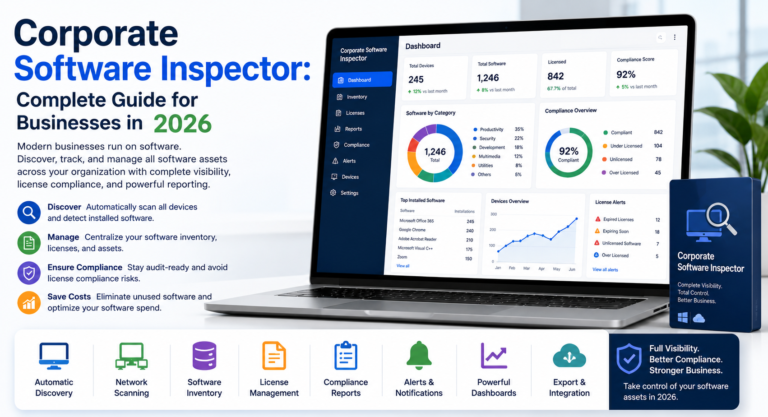
May You Like: Corporate Software Inspector: Complete Guide for Businesses in 2026
Final Verdict
Facility management software has evolved from a maintenance tool into a strategic business platform.
Organizations that adopt the right solution often gain better visibility into operations, improve asset reliability, reduce maintenance costs, and strengthen compliance performance.
The best facility management software depends on your specific requirements.
- MaintainX excels in maintenance-focused operations.
- Coast offers simplicity and flexibility.
- FMX performs well in education and public-sector environments.
- AkitaBox supports asset lifecycle planning.
- Fracttal delivers strong predictive maintenance capabilities.
- Fexa serves large enterprise facilities teams effectively.
Before selecting a platform, assess your operational goals, maintenance complexity, budget, scalability requirements, and integration needs.
The right software will not simply help you manage facilities—it will help you manage them smarter, faster, and more efficiently in the years ahead.
If you have blonde hair, blue eyes, and porcelain skin, discovering your hair color overview can truly help you uncover the ideal clothing colors that enhance your natural appearance. hair colour analysis For people with a cool summer palette, light summer hair colors and refined summer hair color ideas frequently work flawlessly, complementing your complexion without overpowering it. Intense summer hair color variations and even refined winter hair colors are suitable for exploring to bring dimension and vibrancy.
For users wanting to experiment without going permanent, a digital hair color try on free is a game-changer. You can sample different shades like muted summer hair colors or elegant summer hair options and check what works best instead of waiting for making a selection. If you’re keen about the top colors for delicate skin and blonde hair or searching for the best hair color for crisp summer types, this site provided has some handy options and tips to shape your selection.